
Best Window Films for Home (2026): Privacy, Heat & Decorative Picks
Window film for home gets lumped into one category, but the five reasons people actually buy it- privacy, heat, light control, style, or some mix of all — call for different products entirely. A film that blacks out a bedroom won’t perform the same way as one built to cut a west-facing room’s afternoon heat, and neither will look anything like a film chosen purely for its visual effect.
This guide is split by exactly those five use cases, each covering one film we found holds up under real, everyday installation and use, not just strong specs on paper. If you already know what you’re solving for, jump straight to that section. If you’re not sure yet, the buying guide further down walks through how to match the category to your actual window.
Once you’ve picked a film, our DIY Window Film Installation guide covers the full application process for both adhesive and static cling types.
As an Amazon Associate, we may earn a small commission if you purchase through links on this page — at no additional cost to you.
Our Top 5 Picks at a Glance
|
Product
|
Best For |
Privacy Level |
Heat Control |
UV Block |
Installation |
|---|---|---|---|---|---|
|
One-Way / Daytime Privacy |
Daytime Only |
Moderate-High |
90% |
Static Cling |
|
|
Total Privacy |
Full, Day & Night |
High |
100% |
Static Cling |
|
|
Light-filled Privacy |
Full, Day & Night |
Moderate |
96% |
Static Cling |
|
|
Decorative |
Partial |
Moderate |
96% |
Static Cling |
|
|
Heat Control |
Moderate, Daytime |
High |
99% |
Adhesive |
Our Top Picks
Best daytime privacy
KESPEN Window Privacy Film
Pros
Cons
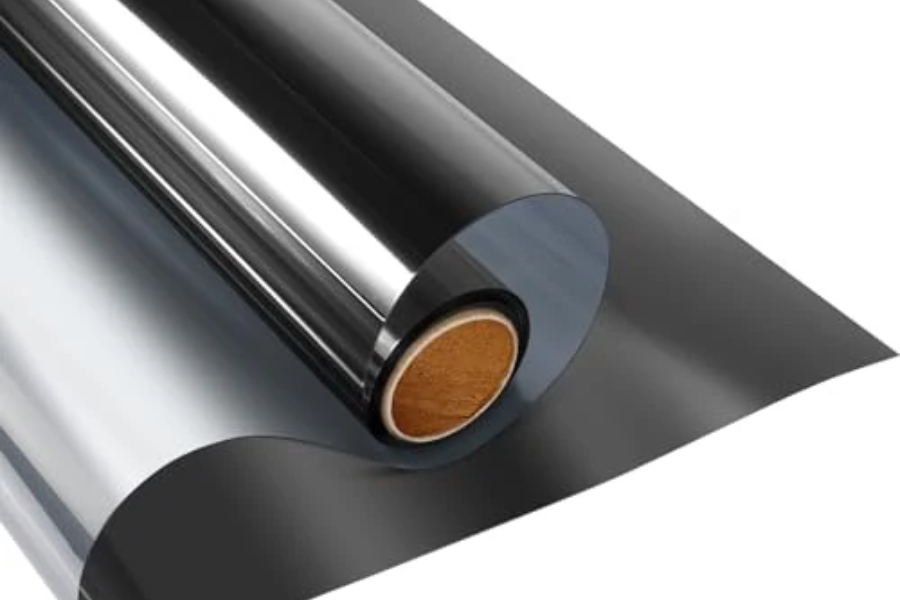
KESPEN is a reliable all-around performer that delivers on the two things most people want from reflective film: daytime privacy and meaningful heat reduction. From the outside, the window takes on a genuine mirror finish during daylight hours, making it effectively hard to see inside while natural light is stronger than interior lighting. In warm climates with significant sun exposure, the heat reduction is substantial enough that energy savings over a summer can offset the cost of the film entirely. But actual savings will vary depending on climate, window orientation, insulation, and air conditioning usage.
Installation is manageable for a first-timer, though a second person helps considerably on larger windows. The film is thicker than standard window tint, which makes it more durable but requires a sharp utility knife and a metal straight edge for clean cuts, which is likely to give you a cleaner result than ordinary scissors, particularly with thicker film. One issue worth knowing before you buy: the last portion of the roll tends to curl tightly due to the narrow cardboard tube it’s wound on, making the final few feet difficult to work with sometimes. Measure carefully and don’t count on the last foot or two being fully usable.
Two limitations apply regardless of installation quality. Privacy disappears at night once interior lights are on, a characteristic of all reflective films, not specific to KESPEN. And this film isn’t compatible with double-pane windows, where absorbed heat trapped between the panes can stress the window seal over time. For a deeper look at how KESPEN compares to other reflective films, see our full Best Reflective Window Film guide.
Get it now on Amazon
Best blackout
Rabbitgoo Blackout Window Film
Pros
Cons
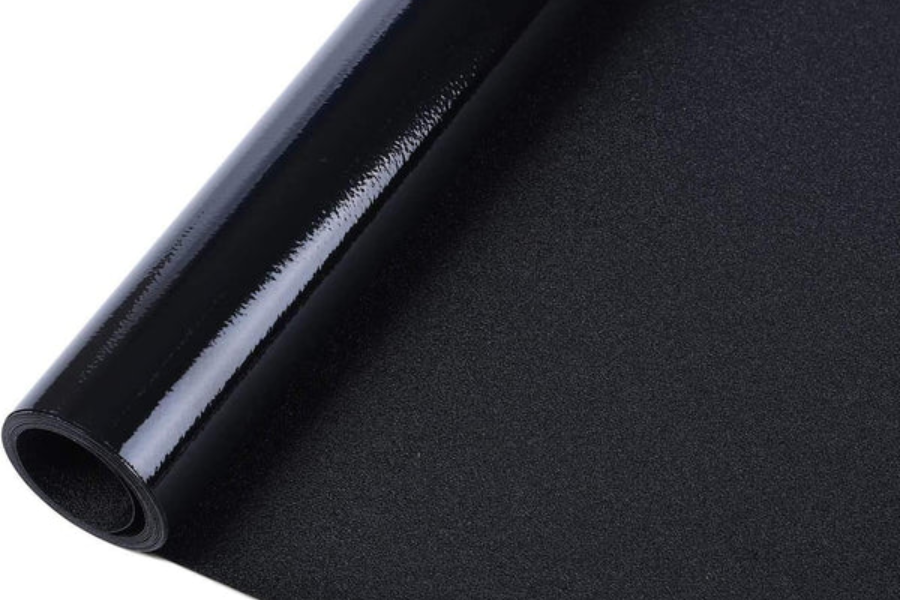
This film delivers exactly what “blackout” promises: complete darkness with zero visibility from either side, at any hour. That full-time coverage is what makes it work for nurseries, shift workers sleeping through daylight, and bedrooms where light leakage genuinely disrupts sleep quality; it’s not a partial fix that still lets some ambient light through. Alongside the privacy, it blocks 100% of UV rays, and in warmer climates the cooling effect is strong enough that some buyers also use it as a way to reduce the amount of sunlight and heat entering the space — a real, felt temperature difference in rooms that get direct sun.
Application uses static cling rather than adhesive, meaning no glue or harsh chemicals. Just a generous spray of soapy water on both the window and the film to get it to sit correctly, followed by trimming the margins and working out air bubbles at the edges. It’s held up well over stretches of continuous use, weeks to months in place without needing to be redone.
Though the most consistent complaint over that timeframe is the edges gradually losing their grip and needing to be smoothed back down. There’s also a firm limitation worth respecting: at least one case of thermal cracking has been tied to using this on a double-pane window, so it’s best kept to single-pane glass.
It’s a popular pick for renters wanting a no-commitment upgrade over curtains, and for pet owners tired of a dog reacting to every passerby outside. No additional tools are being provided, so better to have your own blade and squeegee on hand.
Get it now on Amazon
Best frosted
Dwersty Frosted Glass Window Film
Pros
Cons
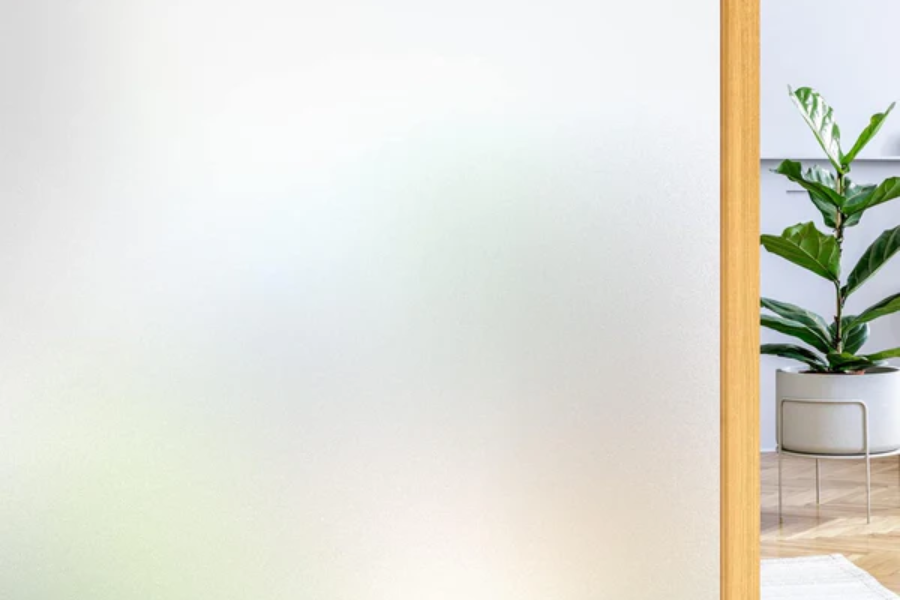
This film solves a problem blackout can’t: full two-way privacy without turning a room dark. The frosted, glass-like finish blocks sightlines while still letting daylight fill the space. The reason it shows up so often in bathrooms, living rooms, and home offices, where you want the space usable in daylight but not visible from outside. It also blocks around 96% of UV rays and measurably cuts heat transfer, and it holds up well long-term. Installs left in place for months show no visible drop in either look or performance to buyers, which matters more than a good first impression for a film meant to stay up indefinitely.
The installation experience is one of its strongest points: it goes on with minimal bubbling, helped by an updated 1-inch backing grid that enhances the cutting accuracy. It uses static cling applied with soapy water and can be repositioned multiple times before fully setting, forgiving if your first placement isn’t perfect. One real limitation: this film is only built for flat, smooth glass, so it won’t hold properly on glass that’s already frosted, cut, or textured. Take a look at your window before ordering.
On the accessory side, the included kit (scraper, cutting knife, small watering can) covers the basics, though the tiny spray bottle in particular feels more like a token add-on than something you’d actually rely on for a full window. A handful of installs saw minor peeling develop at the edges over time, which indicates the film was exposed to conditions that affected the adhesion.
Get it now on Amazon
Best decorative
Rabbitgoo Rainbow Decorative Film
Pros
Cons
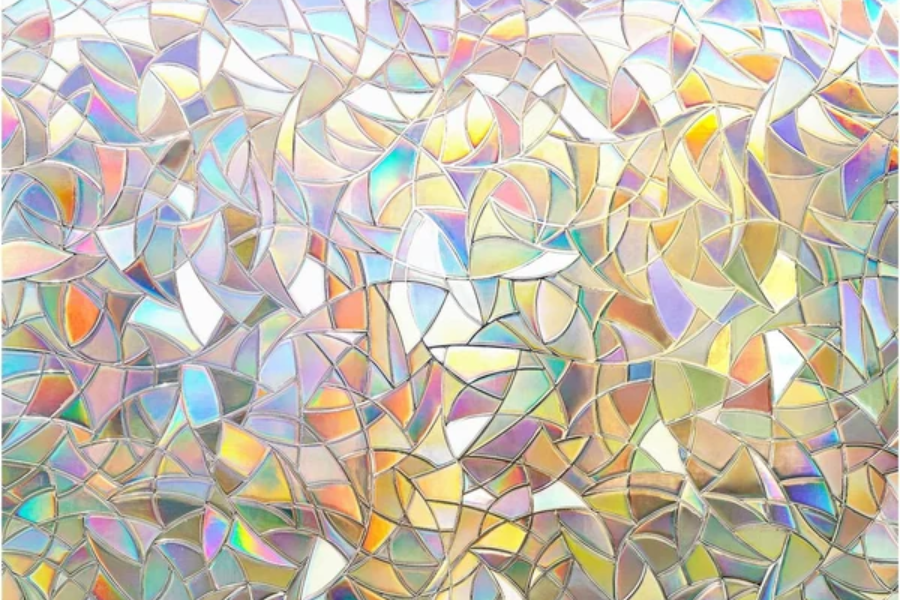
This one isn’t chasing privacy first! It’s built to transform a plain window into something worth looking at. A 3D laser-cut pattern throws scattered rainbow reflections through the glass whenever direct sun hits it, often compared to a stained-glass effect, and takes on a completely different, sparkling character after dark when headlights or streetlights catch it. It shows up most in entryways, living rooms, and kitchens — spaces where the goal is visual interest, not concealment. And the vinyl construction has proven durable enough that stickiness holds through extended placement, with several reports of the film staying firmly in place for months without lifting.
The color effect only exists when light is actively passing through the film, since the material itself has no inherent color, which is also the honest explanation for its privacy ceiling. Manufacturer-rated at roughly 60% protection, this is a semi-private film by design, and in brighter conditions or without direct sun on it, visibility through the glass is a bit clearer than a dedicated privacy film would allow. Worth knowing upfront if privacy is your primary goal rather than a secondary one.
Installation follows the same static-cling, soapy-water process as the rest of this guide, though the material’s thickness makes a sharp tool worth having on hand, and like the frosted pick, it’s only rated for flat, smooth glass rather than textured surfaces. Complaints here are genuinely light, with nothing significant recurring. And, as with several films in this guide, it’s not recommended for double-pane windows.
Get it now on Amazon
Best Heat Control
BDF NA35 Sun Control Film
Pros
Cons
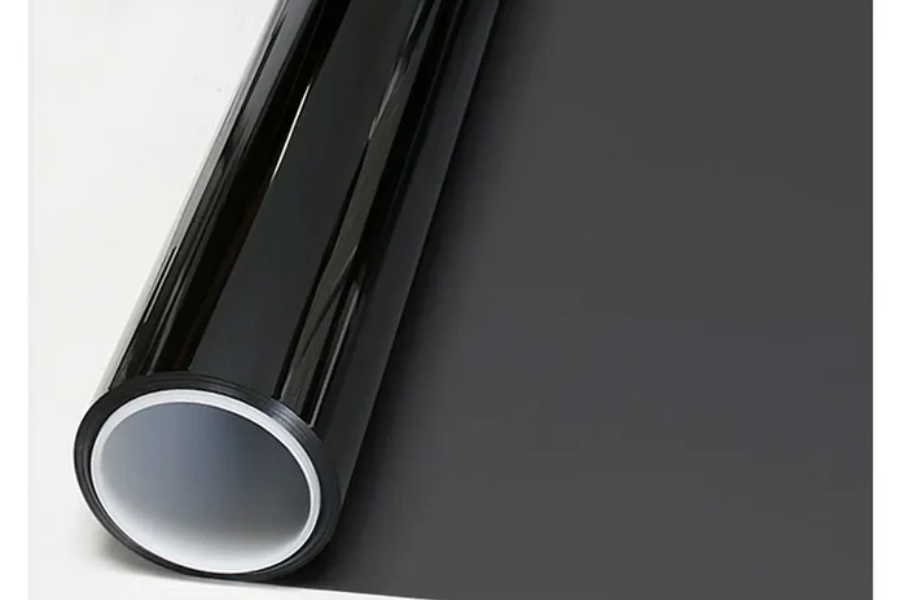
For anyone whose main concern is heat rather than visibility, BDF’s NA35 is built specifically for that job. Real, measurable results back it up: temperature drops of around 10 degrees in some rooms, a case moving from 94°F down to 81°F, and a reported drop in monthly power costs from the reduced cooling load. West- and east-facing rooms benefit especially, cutting down harsh morning or afternoon sun. As a side effect of the film’s finish, it also carries a light one-way mirror look during the day. While UV protection sits at a strong 99%, which helps limit fading on furniture and flooring nearby.
Installation is generally smooth using the included tools and soap-and-water application, though this film is genuinely sensitive to handling. The slightest fold during application can create permanent wrinkles, so care matters more here than with the sturdier static cling options in this guide.
It’s also worth setting tint expectations before buying: this is a medium black finish, letting in more light than a heavily tinted film, so if you’re picturing something dark, it’ll read lighter than expected. Results can vary somewhat depending on window orientation and existing shade; a west-facing window in direct, unblocked sun sees a far more dramatic shift than one with partial tree cover or indirect light, which likely explains the small number of cases showing a more modest difference than the norm.
BDF also backs the BDF S05 film featured in our reflective window film guide, and that consistency across two well-performing products is a reasonable point in its favor.
Get it now on Amazon
How to Choose the Right Window Film for Your Home
Start by identifying what’s actually bothering you about the window: light, heat, or the view — because each pick above is built to solve a different one of those, not all three equally.
If the problem is people seeing in, the type of privacy you need matters. Full-time privacy, day and night, points you to blackout (if you’re fine with zero light) or frosted (if you still want daylight in the room). If it’s only daytime privacy you’re after, say a street-facing window where you mostly care about passersby, a one-way reflective film gets you that mirror effect without darkening the room, but it stops working after dark once your lights are on.
If the problem is heat, don’t default to a privacy film and expect it as a side effect. One-way and blackout films do reduce heat somewhat, but a film built specifically for solar rejection, like BDF NA35, will consistently outperform them on that one job, without the mirror finish or full blackout you might not want.
If the problem is a plain, boring window, decorative film is the outlier in this guide. It isn’t chasing maximum privacy; it’s adding a visual feature to the glass. Expect a lighter privacy level in exchange for that stained-glass effect.
Before you buy, check your glass type. Blackout and frosted films here carry manufacturer warnings against double-pane windows, since trapped heat between the panes can stress the seal over time. And if your glass already has texture (frosted, cut, or patterned), check the listing first; most films are only designed to adhere to flat, smooth surfaces.
Finally, weigh installation type. Static cling films go up with just water, are fully removable, and are the better choice if you’re renting or might reposition later. Adhesive films are more permanent and generally more durable long-term, but less forgiving if you need to move or remove them.